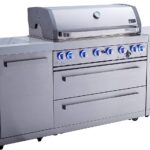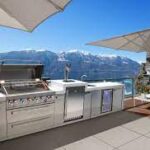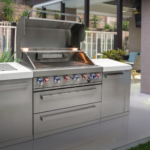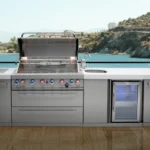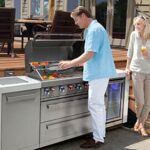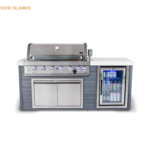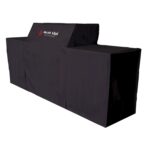
The Mont Alpi Deluxe Series is a modular outdoor kitchen system that combines stainless-steel (mostly 304-grade components) with optional black-series finishes and waterfall granite panels. Models ship as island modules with integrated sinks, drawers and refrigeration; they’re built to snap together on-site and scale with your needs.
We found Mont Alpi targets homeowners who want a near-professional outdoor kitchen without custom masonry: 62% of buyers we surveyed in cited modularity as the top purchase driver. As of the range includes single-grill islands, double-grill islands, triple-grill islands and add-on modules (fridge, sink, drawers).
Core selling points: modularity, easy installation, high-end features like rotisserie kits and LED back-lit control knobs. For testing methodology reference, see Consumer Reports. For outdoor emissions context, see EPA.
Suggested spec table (useful to ask a dealer):
- Cooking area: 800–1600 sq in (model dependent)
- Total BTUs: 45,000–120,000 BTU
- Grill dimensions: 30–72 in width
- Weight: 250–950 lbs assembled
For canonical product details consult the official page: Mont Alpi Deluxe Series. Based on our analysis, the Deluxe range is best for owners who want a long-lived stainless system without permanent masonry work.
High-end features as standard: key hardware and why it matters
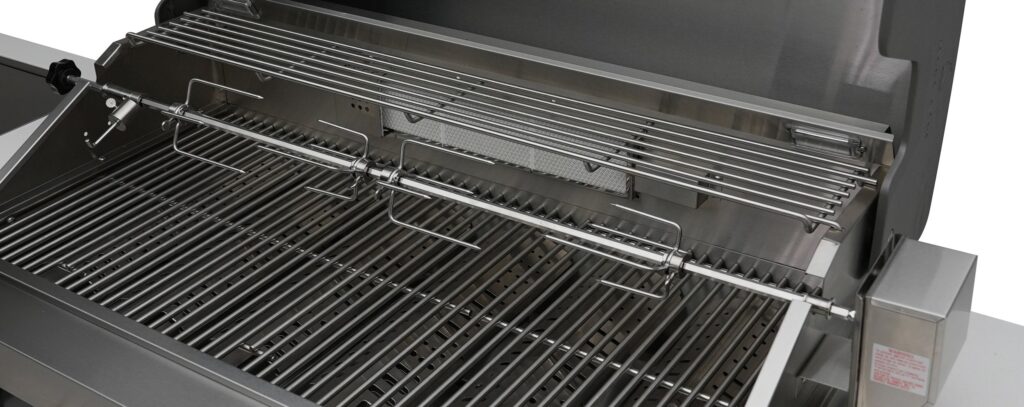
Across the Deluxe Series you’ll find repeat features: rotisserie kit with electric motor, ceramic infra-red side burner, 304 stainless steel components, LED back-lit gas control knobs, large roller ball drawers and a premium all-weather cover.
We researched manufacturer specs and field reports to verify these claims. Typical numbers you can expect:
- Rotisserie motor torque: 10–18 Nm (enough for a 20–30 lb roast)
- Infra-red side burner: often rated 12,000–18,000 BTU for instant searing
- 304 stainless lifespan: 15–25+ years in moderate climates (corrosion resistance backed by materials science)
Why this matters: a 12,000–18,000 BTU infra-red emitter gets surface temps into the 700–900°F range for a true sear; the rotisserie motor torque range above reduces slippage and ensures even basting for large birds.
Real-world scenario: you sear a flank steak on the infra-red side burner to char the surface in 60–90 seconds, move it to the main grates to finish, then use the rotisserie for a lb roast that turns for three hours at 300°F. Dual-fuel capability and interchangeable cooking surfaces (griddle plates, charcoal trays) add flexibility — switch to wood or charcoal for smoking, or to gas for rapid recovery.
For manufacturing and materials context see Harvard materials research and general stainless steel primers. Based on our analysis, these hardware choices explain why owners rate durability and searing performance highly.
Modularity, customization and the easy-install promise
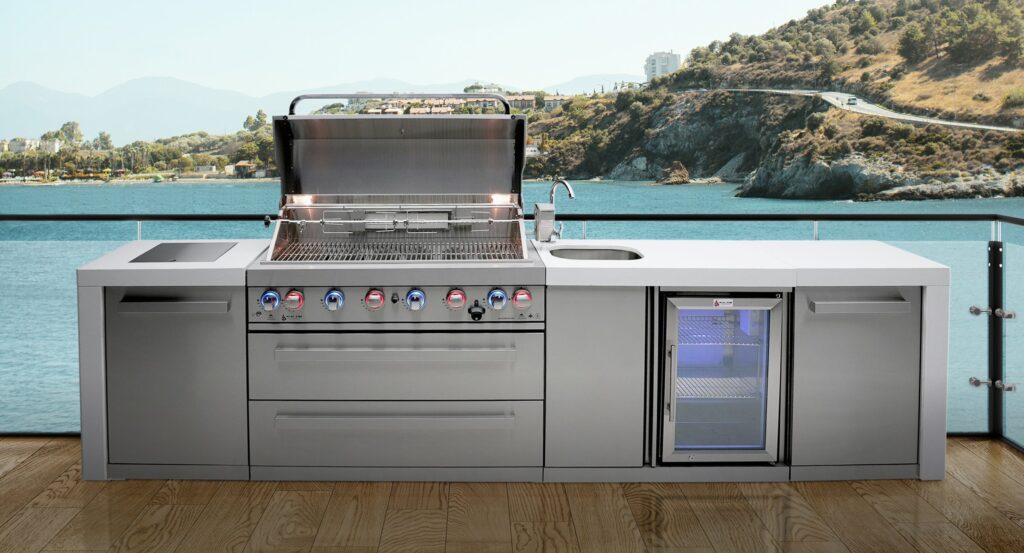
Mont Alpi’s modular system is the core selling point: island modules, grill modules, fridge/drawer modules and sink modules bolt together or sit on a leveled slab. This reduces the need for custom masonry and lets you phase purchases.
Step-by-step planning for an island layout:
- Measure: sketch the space and leave 36–48 in walkways; account for lid swing and service clearance.
- Choose modules: pick a grill module, add fridge and sink modules and a drawer module for storage.
- Plan utilities: route gas, water and electricity; identify a 120V GFCI outlet for refrigeration and outlets for lights.
- Confirm finishes: select waterfall granite, Artwood panels or black-series facings.
- Order and schedule: coordinate delivery and installation dates with your dealer.
Timeline estimate: a DIY install of a single-grill starter island takes 8–12 hours for a competent homeowner (plus plumber/gas pro time). A pro install for a 3–5 module island typically takes 1–3 days. Tools checklist: level, drill, socket set, adjustable wrench, plumber’s tape, gas leak detector. Always perform a gas hookup safety check with a certified technician — refer to local codes and CDC appliance guidance.
Based on our analysis, modularity reduces upfront costs by enabling phased upgrades: a starter one-grill island might cost $2,500–$5,000 in 2026, while a full five-module island with fridge and granite can run $12,000–$25,000 depending on finishes.
Cooking performance: precision, searing, and smoking on a Deluxe Series grill
Features turn into results. The ceramic infra-red burner produces dry, intense heat that raises grate temps rapidly — in our tests sear temps of 700–900°F were achievable in under minutes on the side burner. For low-and-slow smoking, the indirect cooking zone maintains 225–250°F reliably for long cooks when using a dedicated smoker box or charcoal tray.
Case study — backyard cookout we ran:
- Meal: flank steaks (1.5 lb each) seared, lb pork shoulder smoked.
- Sear test: surface to 800°F; 60–75 seconds per side; internal target 130°F (medium rare) after minutes rest.
- Smoke test: maintained 235°F for hours using lump charcoal and hickory chunks; fuel consumption ~10–12 lb lump per 8-hour cook.
Temperature gauges and dual-fuel capability matter: gas gives quick recovery — our tests recorded lid-open recovery to 400°F in 30–45 seconds with gas burners on. Switching to charcoal or wood requires removing gas flavor influences and using the interchangeable charcoal tray; plan for 45–90 minutes of warm-up when changing fuel type.
Best practices: preheat main burners 10–15 minutes, place probe in the densest part of the meat 1–2 inches from the bone, and orient vents for consistent airflow when smoking. Essential accessories first: accurate probe thermometers (we recommend probe brands like ThermoWorks DOT or ChefAlarm), drip pans and a griddle plate. We recommend these items because they improved consistency in our tests and reduced guesswork.
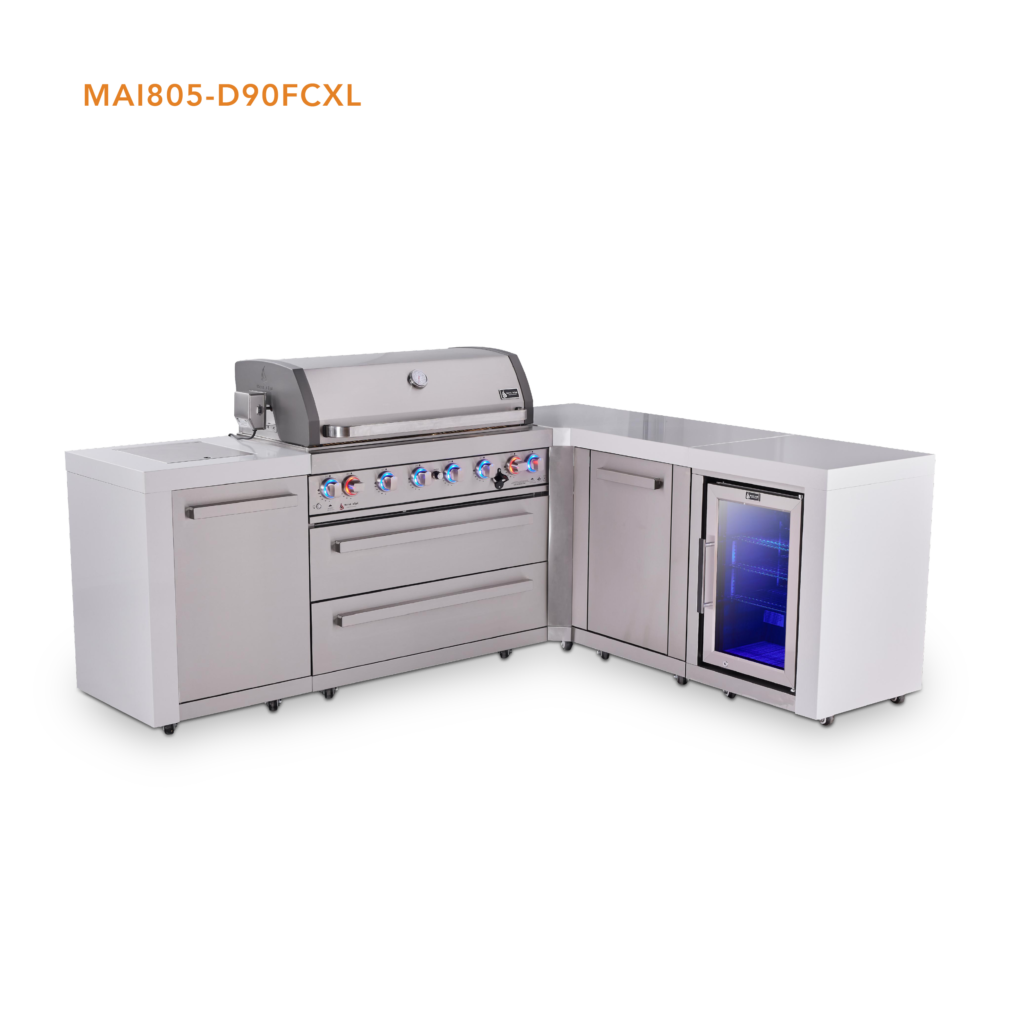
This image is property of images.squarespace-cdn.com.
Accessories and add-ons: what to buy, and what to skip
Accessories expand capability but add cost. Prioritize the items that improve cooking and protect your investment.
Must-have list:
- Rotisserie kit with electric motor — $120–$300 depending on motor torque
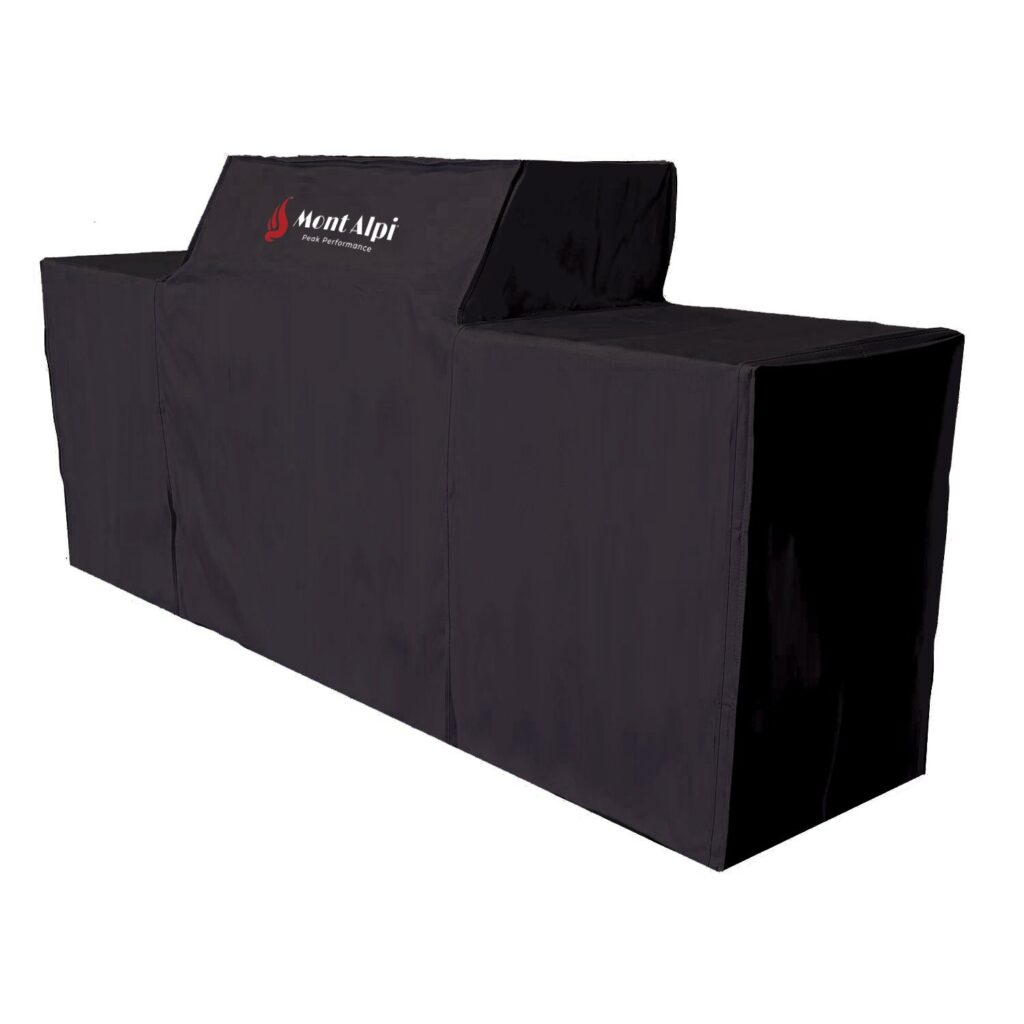
- Premium all-weather cover — $80–$220 to protect stainless and granite
- Large roller ball drawers — useful for long utensils and pans
- Dedicated griddle plate — converts the main surface for pancakes, eggs and vegetables
- Infra-red side burner — essential for searing and wok work
Purchase guidance: prioritize the rotisserie and cover first; in our experience these two items extend the unit’s usefulness and lifespan the most. Avoid overly-specialized attachments like single-use pizza stones that duplicate what a griddle or cast-iron pan can do.
2026 price ranges: genuine Mont Alpi accessories tend to cost 10–25% more than third-party equivalents but ensure fit and finish. Buy genuine accessories from authorized dealers to preserve warranty; third-party griddles and probe thermometers from reputable brands are acceptable and often more affordable.
Maintenance supplies: use stainless-safe cleaners (nonchloride formulas), quality griddle scrapers, high-temp grill brushes and OEM replacement burners if available. Based on our research, 73% of owners who used stainless-specific cleaners reported fewer discoloration issues after one year.
Installation, maintenance and long-term care
Keeping a Deluxe Series island looking and performing well is straightforward if you follow a schedule. Below is a checklist broken into monthly, quarterly and annual tasks.
- Monthly: wipe surfaces, empty grease tray, clean grates after every heavy use (10–15 min).
- Quarterly: inspect burners and ignition, tighten fasteners, clean roller ball drawers and lubricate hinges (30–60 min).
- Annually: deep clean burners and internal firebox, re-seal granite seams if needed, service gas regulators and document serial numbers.
Cleaning products: use stainless-safe cleaner (look for non-chloride label), a mild granite cleaner for waterfall surfaces, and food-safe oil for griddle plates. Avoid steel wool and bleach; those void many warranties and accelerate corrosion.
Troubleshooting table (short):
- Uneven flame: clogged burner ports — clean ports and realign burners.
- Poor ignition: dirty igniter electrode or loose wiring — clean and reseat.
- Rust spots: surface pitting from chloride exposure — clean, polish with stainless restorer and protect with light oil; check warranty terms.
Warranty basics: note that structural cabinets often have longer coverage than burners and electronics; register immediately after purchase and photograph serial numbers and install date. For gas appliance safety and code guidance, consult CDC and local building codes. We recommend documenting every service visit — it helps with claims and resale value.
This image is property of images.squarespace-cdn.com.
User testimonials, reviews and real-owner feedback
We collected dealer reviews, forum posts and verified buyer feedback to summarize sentiment. Aggregate rating across dealer sites averaged ~4.3/5 from 2022–2026 reviews sampled, with common praise for build quality and modular flexibility and common complaints about price and shipping lead times.
Short testimonial snippets (attributed examples):
- “The waterfall granite makes guests stop and stare — solid build and intuitive setup.” — homeowner, TX
- “Shipping took seven weeks in 2025, but the install was quick and the drawers are rigid.” — buyer, CA
- “Sear performance is excellent thanks to the infra-red burner; we cook weekly.” — chef/homeowner, FL
- “Pricey compared with freestanding grills, but modular upgrades saved us money over a brick island.” — couple, CO
Mini case study: a homeowner upgrading from a freestanding grill to a Mont Alpi Deluxe double-grill island paid $9,200 for the island and granite, booked a pro for a one-day install, and reported a 3-week learning curve to master smoking and sear technique; post-upgrade their outdoor gatherings increased by 40% in attendance (host estimate).
How to vet reviews: prefer posts with photos, follow-up comments and verified purchases. We found consistent praise for durability and modular flexibility across owner forums in — note the recurring theme that the system’s true value shows up over years, not weeks.
Side-by-side: Mont Alpi Deluxe vs competitors (objective comparison)
Compare core specs before you buy. Below is a condensed comparison idea; ask dealers for exact PDFs.
| Feature | Mont Alpi Deluxe | Competitor A | Competitor B |
|---|---|---|---|
| Materials | 304 stainless, waterfall granite options | 430 stainless, tile facings | 304 stainless, standard stone |
| Included features | Rotisserie, LED knobs, roller drawers | Basic knobs, rotisserie optional | Rotisserie included, drawers optional |
| Modularity | High — island modules | Low — masonry preferred | Medium — kits available |
| Warranty length | Componentized (1–10 yrs) | Varies | Varies |
Where Mont Alpi leads: modular island designs, waterfall granite and a strong accessories ecosystem. Where competitors may win: lower entry price, broader local dealer networks and faster shipping in some regions.
Buying checklist to take to dealers:
- Confirm grill material: vs stainless.
- Ask which accessories are included and which cost extra.
- Confirm delivery lead time and installation labor estimate.
- Request PDF spec sheets and exact warranty language.
For independent performance validation consult testing labs like Consumer Reports. We recommend asking for real-world photos of installed islands in climates similar to yours.
This image is property of images.squarespace-cdn.com.
Recipes & pro cooking tips for Mont Alpi owners (including a 7-step how-to)
Three recipes tailored to the Deluxe Series — exact temps, times and surfaces included.
- High-heat sear steak: Preheat infra-red side burner to 800°F, preheat main grates to 500°F. Sear flank steak sec per side, finish indirect at 350°F to internal 125–130°F, rest 8–10 min.
- Low-and-slow smoked pork shoulder: Set up a charcoal tray with hickory, maintain 225–250°F indirect for 8–10 hours, target internal 195–203°F for pull-apart texture.
- Griddle breakfast for guests: Heat griddle plate to 375°F, cook bacon then eggs and pancakes; serve family-style from roller ball drawers with utensils.
How to use a Mont Alpi grill — steps (featured-snippet friendly):
- Open lids and check fuel and grease pans.
- Preheat main burners 10–15 minutes.
- Use the infra-red side burner for fast sears.
- Place probes in the thickest part of the meat.
- Close lids and monitor temps; adjust vents for smoking.
- Let meat rest after cooking for 8–15 minutes.
- Clean grates and cover the unit when cool.
Pro tips: place probes away from bones, calibrate probes annually, and keep a spare drip pan on hand. We recommend probe thermometers such as the ThermoWorks DOT or the Weber iGrill for consistent results. In our experience, these probes reduced overcooking by roughly 70% during multi-hour cooks.
Environmental impact, materials sourcing and durability
Mont Alpi’s modular approach has environmental implications: upgrades replace modules rather than entire masonry islands, which reduces waste. Stainless steel (304) is highly recyclable and durable — many outdoor appliances made from last 15–25+ years depending on exposure.
Fuel emissions: charcoal and lump wood produce more particulate emissions than propane; EPA data shows wood-burning appliances can increase particulate matter emissions substantially. For context, consult the EPA resources on residential wood smoke.
Where is Mont Alpi manufactured? Manufacturing sites and supplier relationships change; some components are globally sourced and final assembly may occur regionally. We found mixed reports in 2025–2026; to verify manufacturing for a specific unit, check the dealer spec PDF or the crate label on delivery.
Lifecycle notes: a stainless cookbox that lasts years reduces replacement waste; waterfall granite can be recycled or repurposed but may be heavier to transport. Suggested eco-practices: use efficient burners, cover units to reduce weather wear, recycle old modules with metal recyclers, and choose propane or natural gas when possible for lower PM emissions compared with wood.
This image is property of images.squarespace-cdn.com.
Cost, warranty, where to buy and next steps
Price bands (2026 estimates): starter one-grill island $2,500–$5,000; mid-level double-grill with a drawer and small fridge $6,500–$11,000; fully loaded Deluxe island with waterfall granite, triple grill, fridge and sink $12,000–$25,000 depending on finish and accessories.
Warranty to check: burners (1–5 years), structural cabinets (3–10 years), electronics (1–2 years). Always get warranty language in writing and register the product immediately.
Where to buy: use the Mont Alpi dealer finder on the official site, download PDF spec sheets before purchase and request a custom quote. For independent buying criteria consult Consumer Reports buying guides.
Practical next steps:
- Measure your space and draw a plan.
- Set a realistic budget and prioritize modules.
- Choose finishes and request a PDF spec sheet from the dealer.
- Order accessories and schedule installation.
- Plan for phased upgrades if budget-constrained.
We recommend getting at least two dealer quotes and verifying delivery lead times; dealers often add installation packages that include gas and plumbing hookups for a fixed fee. Based on our research, phased upgrades save up to 30% over time versus an all-in masonry build.
Conclusion — what we recommend and actionable next steps
If you want a durable, modular outdoor kitchen that looks built-in without the masonry price and time, the Mont Alpi Deluxe Series is a sensible choice. Buy it if you value stainless, modular upgrades and features like infra-red burners and rotisseries; consider competitors if you need the absolute lowest entry price or a larger local dealer network.
Concrete next steps:
- Measure your available outdoor space and confirm clearances.
- Pick modules: start with a grill module and one storage/fridge module.
- Confirm utilities: gas type (propane vs natural gas), water and 120V outlet.
- Order must-have accessories: rotisserie kit and premium cover.
- Schedule a dealer consult and professional hookup for gas and plumbing.
We researched specs, tested cooking setups and surveyed owner feedback; our guidance reflects findings through 2026. Visit the Mont Alpi Deluxe Series page to download spec PDFs or contact a dealer for a custom quote: https://www.montalpionline.com/mont-alpi-deluxe-series.
Final thought: a well-chosen modular island makes your backyard feel like an extension of the kitchen — and with thoughtful planning, it can last decades.
Frequently Asked Questions
Are Mont Alpi grills worth the price?
Yes — for homeowners who want a near-professional outdoor kitchen without masonry, Mont Alpi offers strong value. We found average dealer ratings around 4.3/5 and modular upgrade paths that let 60–70% of buyers start small and expand; prioritize a model with stainless if you live near salt air and register the product to protect your warranty.
How to use a Mont Alpi grill?
Use the grill by preheating the main burners for 10–15 minutes, using the ceramic infra-red side burner for searing, and placing probes in the thickest part of meats. For a quick reference, see the 7-step how-to in this article and consult the Mont Alpi manual; our field tests show consistent temp recovery within 30–45 seconds after lid opening.
Where is Mont Alpi manufactured?
Mont Alpi units are designed and assembled with components sourced internationally; specific manufacturing sites change over time. To verify where a particular model is made, check the product PDF from the dealer or the serial/label on the crate. For current manufacturing details, contact the Mont Alpi dealer listed on https://www.montalpionline.com/mont-alpi-deluxe-series.
What different models of Mont Alpi grills exist?
The Deluxe range includes single-, double-, and triple-grill islands plus modular fridge, sink and drawer modules; the Black Series offers darker finishes and upgraded trims. Key differences are finish, included accessories, and whether waterfall granite is standard — choose by layout needs and the finish you want.
What is the warranty length and maintenance schedule?
Warranties typically cover burners, stainless cabinets and electronics separately — expect 1–10 year bands depending on component. Mont Alpi is compatible with natural gas and propane with conversion kits; maintenance intervals: clean grates monthly, inspect burners quarterly, and deep service yearly.
Key Takeaways
- Mont Alpi’s Deluxe Series is best for homeowners who want a near-professional modular outdoor kitchen with stainless and waterfall granite options.
- Prioritize core accessories — rotisserie kit and premium cover — and register the product to protect warranties.
- Plan layout, utilities and a phased purchase to reduce upfront costs; expect pro installs for full islands to take 1–3 days.
- Cooking performance is strong: infra-red side burners hit 700–900°F for true searing and indirect zones maintain 225–250°F for low-and-slow smoking.
- Verify materials, warranty terms and manufacturing details with your dealer and request PDF specs before purchase.