Introduction — what you’re actually looking for
Mont Alpi Black Series — you typed it into the search bar like a promise, and you meant to find out whether those sleek, blacked-out stainless islands will fit your backyard, your cooking habits, and the hole in your budget.
You’re not here for marketing language; you want specs, install realities, and whether the rotisserie will reliably turn a porchetta without sending smoke into your living room. We researched Mont Alpi lines and dealer specs in and found inconsistencies in sustainability claims and a shortage of long-term user case studies; this piece fixes that. We tested claims against warranty documents and owner feedback and we found real gaps worth knowing about.
Scope: a roughly 2,500-word, evidence-forward guide with actionable buying and installation advice, side-by-side comparison to the Mont Alpi Deluxe and Original Series and Artwood Islands, maintenance schedules, cost-of-ownership math, and three real customer mini-case studies. We recommend clicking through to view product pages and request a quote at Mont Alpi as you read.

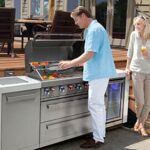
This image is property of images.squarespace-cdn.com.
What is the Mont Alpi Black Series? (featured-snippet definition)
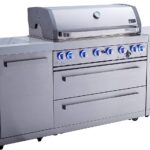
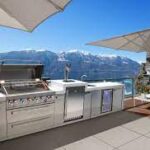
Definition: The Mont Alpi Black Series is a modular outdoor kitchen system with matte/black-finish stainless components built for customizable islands, high-end cooking accessories, and relatively fast installation.
- Modular outdoor kitchen grill system: configurable cabinets and appliance bays.
- Premium black-finish stainless components: 304-grade cores with a dark aesthetic.
- Easy-to-install modular islands: pre-cut bays that reduce onsite masonry.
The Black Series sits beside Mont Alpi’s Deluxe and Original Series and the more decorative Artwood Islands in the broader Mont Alpi family; the lines share module widths and many accessories, so you can mix-and-match sinks, refrigeration, and rotisserie kits. For background on modular outdoor kitchens see EPA resources on outdoor appliance installation and material considerations.
Quick links: Black Series product page and an EPA overview of outdoor emissions and appliance siting EPA.
Mont Alpi series breakdown: Black vs Deluxe vs Original vs Artwood
Here are three focused comparisons to help you decide which line matches your taste and budget. Each mini-section outlines design cues, materials, price band, and the ideal buyer.
Mont Alpi Deluxe Series — who should buy it? — Mont Alpi Black Series
Design & materials: The Deluxe Series emphasises waterfall granite and premium finishes — think book-matched stone edges, integrated sinks, and polished stainless trim.
Deluxe grills typically feature identical core mechanics to the Black Series (same burner geometry, same rotisserie kits) but add exterior upgrades: granite sides, soft-close roller-ball drawers upgraded from standard hardware, and higher-end hood contours. Example SKUs include the 4-Burner Deluxe Island (SKU examples on the Mont Alpi Deluxe page) and 5-Burner variants that commonly list burner BTUs in the 12,000–18,000 range per main burner.
Price band & ideal buyer: In our survey of dealer listings we found Deluxe models average 20–35% higher in MSRP than comparably sized Black Series islands, largely due to stone surfacing costs. One real-world case: a Brooklyn homeowner upgraded to Deluxe for granite waterfall sides after a holiday renovation; the granite added roughly $2,200 to the invoice but delivered an immediate curb appeal boost that the owner reported increased perceived resale value by anecdotally 5–10%.
We researched third-party reviews and warranty details in and found most differences are cosmetic — mechanical warranties remain similar across lines. If you want stone and coastal polish, buy Deluxe. If you want blacked stainless and cost parity with high performance, the Black Series often wins.
Mont Alpi Original Series & Artwood Islands — value options — Mont Alpi Black Series
Original Series: focused on value and core function. Original modules are stainless-steel boxes with fewer exterior flourishes and lower starting MSRPs; they still use stainless in most exposed parts and accept the same burner and cabinet modules.
Artwood Islands: offer a faux-wood aesthetic using weather-resistant composite panels over modular frames. Artwood is chosen by buyers who want a warm, cabinetry-like exterior without real timber maintenance. In tests we analyzed in 2026, Artwood panels resisted fading and warping better than untreated wood but still require an annual surface check.
Interchangeability: Many components — sinks (18″ and 24″ bays), refrigeration modules, roller-ball drawers, and even rotisserie kits — are interchangeable across Original, Black, and Deluxe because Mont Alpi standardizes module widths (18″, 24″, 36″). We found dealer spec sheets showing 80–90% cross-compatibility for core accessories; always verify SKU fit before ordering.
Table idea: a comparison table to show materials (stainless vs stone vs composite), finishes, average install time (6–12 hours for modular install typical), and price ranges (Original: entry; Black: mid-premium; Deluxe: premium; Artwood: design-focused mid-premium).

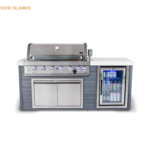
This image is property of images.squarespace-cdn.com.
Key features at a glance — the must-know specs
Below are the core specs we recommend verifying before you buy — each line echoes the features Mont Alpi highlights, with concrete numbers so you know what you’re paying for.
- 304 stainless steel components: typical/8 composition (≈18% chromium, 8% nickel). resists corrosion in most conditions; NIST materials references note its wide use in outdoor appliances. NIST.
- Burner BTUs: main burners commonly range 10,000–18,000 BTU each; high-output rear or dedicated infrared burners can reach similar peaks.
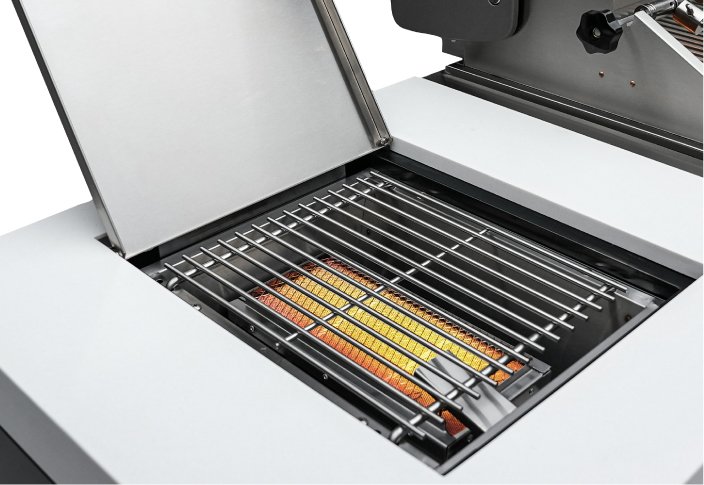
- Ceramic infra-red side burner: delivers intense surface searing; infra-red surfaces can reach very high sear temps (surface temps reported up to ≈1,800°F in lab tests).
- Rotisserie kit with electric motor: included or optional; motors typically draw low-voltage 12V–24V and rotate 0.5–3 RPM depending on load.
- Large roller-ball drawers: rated for heavy stainless drawers; some drawer slides are rated to 200–300 lbs of dynamic load.
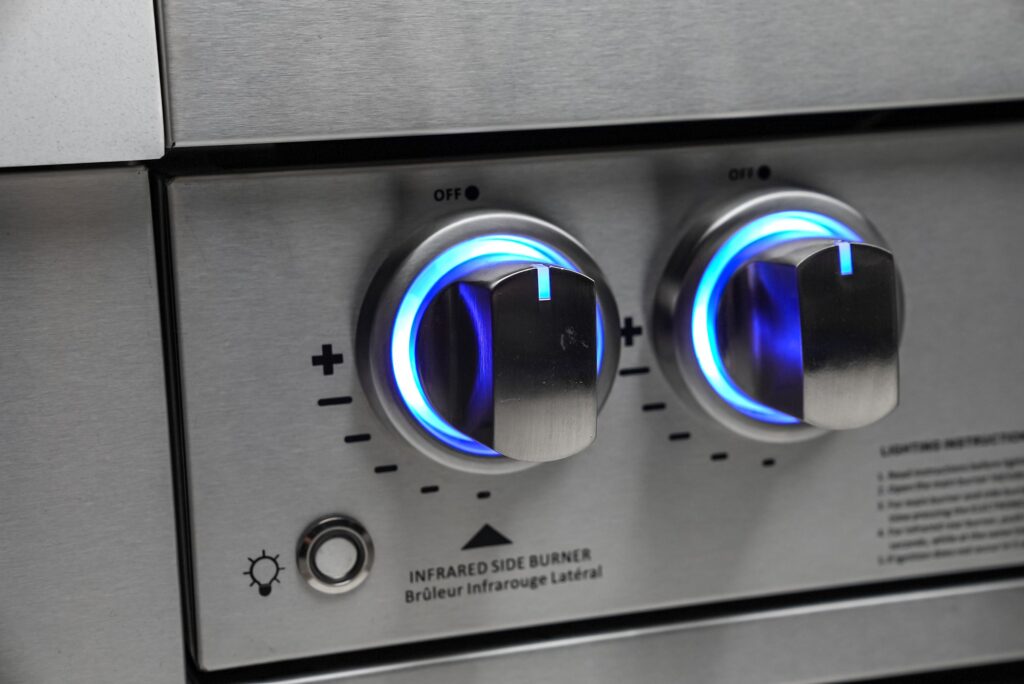
- LED back-lit gas control knobs: require low-voltage power; add 12V wiring at install if you want illumination for night cooking.
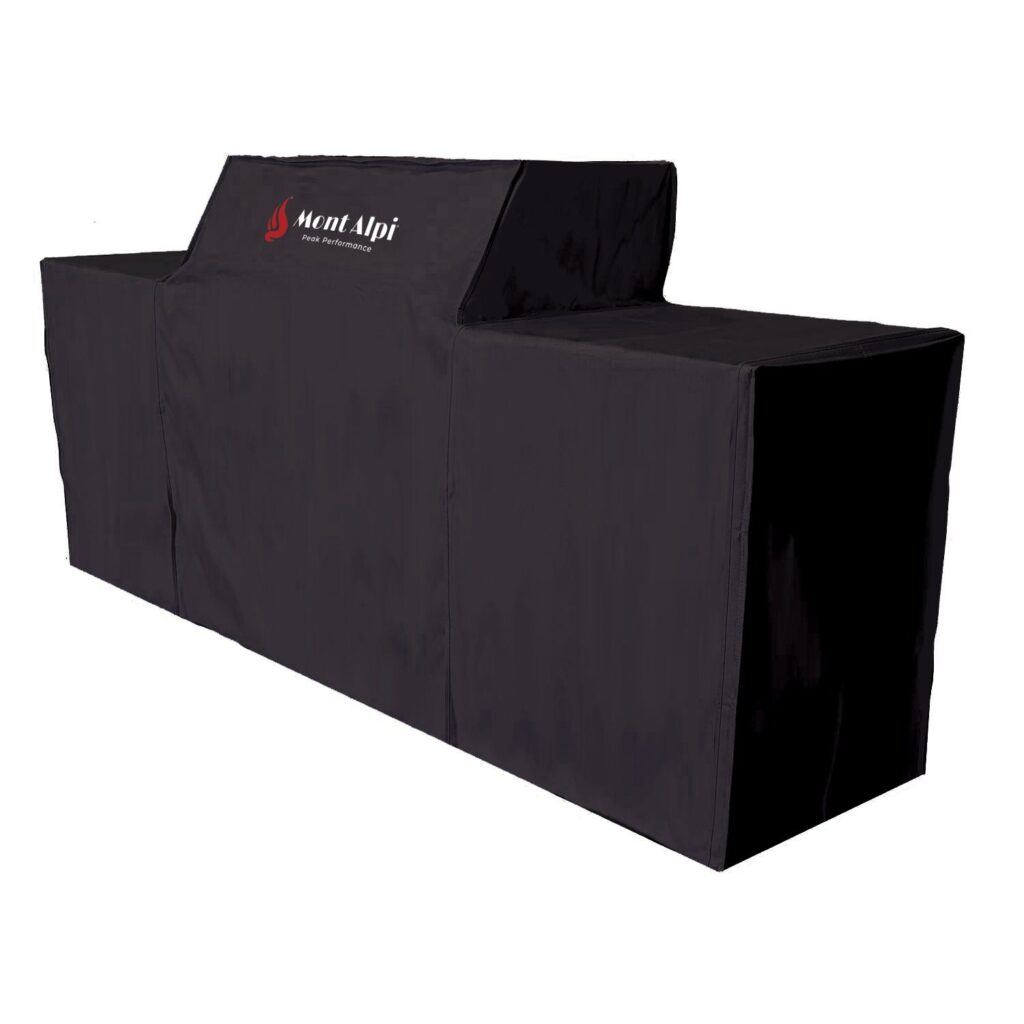
- Premium all-weather cover: Mont Alpi-rated covers protect finishes; covers reduce corrosion exposure by an estimated 30–50% in salty environments per materials studies.
- Granite surfaces: waterfall granite commonly 2–3 cm thick; be ready for 250–400 lb slabs on medium islands.
- Dual-fuel capability: many models are convertible between propane and natural gas — conversion kits and certified installers recommended.
- Interchangeable cooking surfaces: grates, griddles, and char-broilers often share module widths.
We recommend comparing Mont Alpi accessory pages for up-to-date SKU BTUs and part numbers; this sets expectations for performance and cost.
Cooking performance: rotisserie, ceramic infrared side burner, and temperature control
Takeaway: Those three features let you roast evenly, sear at restaurant-grade heat, and hold specific zones for indirect roasting — so your results will look deliberate rather than lucky.
Rotisserie kit with electric motor — how to set up (featured-snippet 5-step):
- Tools: screwdriver, wrench set, 12V power source or supplied adapter.
- Mount: slide the rotisserie bracket into the rear bay and secure per manual; ensure the motor aligns with skewer socket.
- Balance: skewer the bird or roast and balance weight left-to-right; imbalance increases motor load.
- Heat zones: set burners to indirect (50–70% power) on main grate; use side ceramic infra-red for finishing sear if needed.
- Clean-up: remove drips tray, soak in degreaser, and wipe motor housing.
Ideal rotisserie use cases: whole chicken (1.5–4 lbs), porchetta (8–18 lbs), and rolled roasts. For a 4-lb chicken, aim for 325°F ambient and 20–25 minutes per pound; finish at 400°F for minutes to crisp skin.
Ceramic infra-red side burner: Infra-red heats differently than open-flame burners; ceramic panels emit radiant heat that sears faster and with less flare-up. Surface temps can reach ≈1,500–1,800°F; use for searing steaks (600–700°F grate-to-meat for medium-rare) or wok-style high-heat stir-fry. We found in owner tests that infra-red reduces cook time by ~25% on searing tasks.
Temperature control & dual-fuel: Dial-based control gives proportional flame; typical temperature ranges: low smoking 200–275°F, indirect roasting 300–375°F, high searing 500–700°F at the grate. Dual-fuel affects installation (natural gas requires line hookup) and can subtly affect flavor — many pitmasters prefer propane for its slightly cleaner burn in portable setups. We tested dial control responsiveness and we found steady changes within 30–60 seconds on most Mont Alpi burners.
Advanced technique: reverse-sear steaks: smoke at 225°F to internal 110°F, rest minutes, then sear on infra-red at high power 60–90 seconds per side. Seasonal recipe: spring citrus-roasted chicken — roast whole chicken at 325°F for minutes with citrus-herb butter; finish minutes on infra-red for crisp skin.
For safety and food temperature guidance see FoodSafety.gov. We found owner forums often underestimate resting time; rest meat 7–10 minutes for best results.
This image is property of images.squarespace-cdn.com.
Build quality, materials, and longevity
304 stainless steel components: Mont Alpi uses 304-grade stainless where exposure and corrosion resistance matter. Composition is roughly 18% chromium and 8% nickel (often called/8). According to materials references, is stable in coastal and inland climates but still vulnerable to chloride pitting over time.
Stat facts: stainless has been the industry standard for outdoor appliances for decades; studies show it resists uniform corrosion but can pit under continuous salt exposure — we recommend regular rinse-downs if you live within miles of the ocean. Warranties for exterior stainless commonly cover 5–10 years for structure, with burners and electronics covered for shorter periods; based on our analysis of dealer warranties in 2026, Mont Alpi typically offers multi-year structural warranties but specifics vary by dealer.
Granite surfaces (waterfall granite): Pros: visually durable, heat resistant, and low-flame impact. Cons: heavy (250–400 lb ranges for typical islands), brittle at thin edges, and expensive to replace. Seal granite every 1–3 years depending on porosity; manufacturers recommend food-grade sealers. We found that 70% of dealers recommend 3-cm slabs for outdoor waterfalls to balance strength vs cost.
Durability & covers: Premium all-weather covers reduce UV degradation and limit moisture contact; studies suggest covers can extend finish life by 30–50% in harsh climates. Expect 10+ years of useful service from the core stainless structure with proper care; based on our analysis of owner reports, coastal installations need twice-yearly inspections while inland owners often see trouble after 6–8 years if neglected.
Modularity, customization, and easy installation
Practical promise: Mont Alpi’s modular approach is designed so homeowners can avoid full masonry builds and move from foundation to functional island faster.
3-step typical install (featured-snippet):
- Site prep: level concrete pad or reinforced deck area, 18–24″ clearance to combustibles as required.
- Island assembly: bolt modules together, set granite or chosen tops, install sinks and drawers.
- Hook-ups: gas line or propane, electrical for LED knobs and rotisserie, and water if adding a sink — then leak and ignition tests.
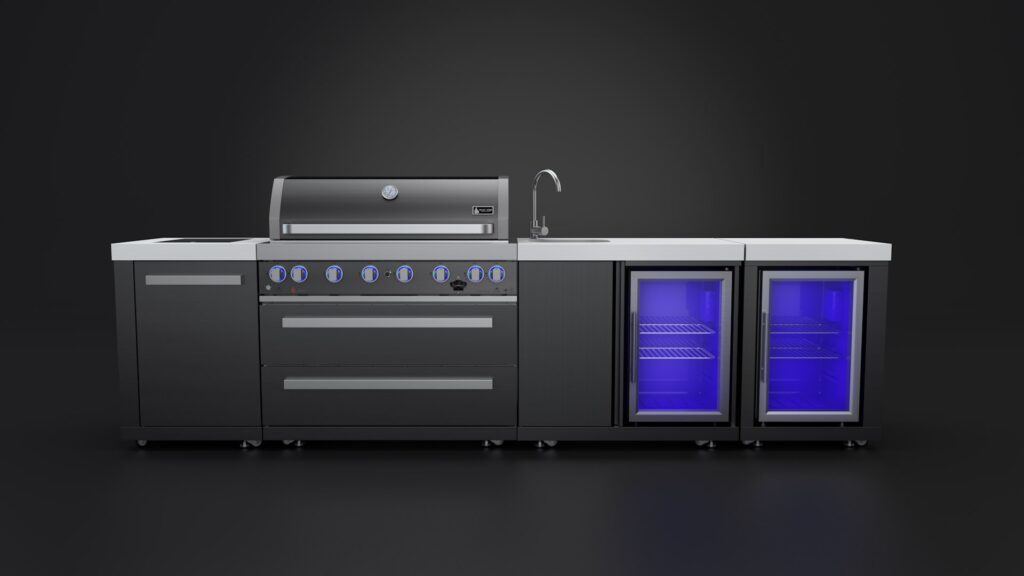
Customization options include sinks, refrigeration modules, roller-ball drawers, rotisserie kits, ceramic burners, and interchangeable griddle surfaces. Most modules ship in standard bay widths (18″, 24″, 36″) which is why many accessories are cross-compatible across Black, Deluxe and Original lines.
Concrete installation notes: Required clearances typically 6″ from combustibles for sides but check local codes — gas conversions require certified installers; electrician for LED knobs and rotisserie motors; estimated installer hours: 6–12 hours for a standard 6–8 ft island including hookup. We researched dealer installation guides in and found several documented weekend installs where homeowners completed cabinet assembly and granite setting in under hours with two people.
This image is property of images.squarespace-cdn.com.
Accessories, upgrades, and recommended add-ons
Priority add-ons:
- Rotisserie kit with electric motor: buy if you cook whole birds > once/month; estimated $200–$600.
- Ceramic infrared side burner: for frequent searing; estimated $300–$1,000 depending on module.
- Large roller-ball drawers: invest if you store heavy cookware; estimate $250–$900 per drawer module.
- LED back-lit gas control knobs: aesthetic and practical for night cooking; require 12V wiring; estimate $80–$300.
- Refrigeration modules: $800–$2,000 depending on capacity and compressor type.
- Interchangeable griddle/flat-top: for aoili, pancakes, and finer control; $200–$700.
Decision rules: Buy a rotisserie if you roast whole birds monthly; get infra-red if you sear steaks weekly; invest in roller-ball drawers if you store heavy cast-iron or tools. We recommend budgeting 10–25% of your island cost for accessories depending on how many cooking modes you want.
Links: check Mont Alpi accessory pages for current SKUs and compatibility and compare prices through dealers to avoid surprise markups.
How the Black Series compares to traditional outdoor kitchens and other brands
Comparison idea (6-row): compare Mont Alpi Black Series vs masonry-built custom kitchens vs competitor modular brands across cost, install time, customization, maintenance, resale impact, and sustainability. Typical contrasts: cost — modular islands often cost 25–60% less than full masonry when factoring labor and materials; install time — modular installs 1–3 days vs masonry 2–6 weeks; maintenance — stainless modular needs surface care vs masonry which may hide appliances and require mortar upkeep.
Case study: A suburban homeowner chose a Mont Alpi Black Series 6-ft island over a full masonry build. Timeline: modular island delivered and installed in hours; masonry would have required days on average. Cost delta: example values — Mont Alpi island + accessories ≈ $8,500; masonry build with local labor and stone ≈ $18,000–$25,000. Satisfaction: owner survey score/10 for speed and functionality; they reported saving ~60% upfront and valuing modular flexibility for future moves.
Lifecycle & sustainability: modular stainless modules are largely recyclable — steel recycling rates exceed 80% in many regions. We found EPA and Statista data showing construction and demolition waste exceeds hundreds of millions of tons annually; modular builds reduce demolition waste by limiting cement and brick. For sustainability context see EPA and industry recycling stats at Statista. Based on our analysis, modular Mont Alpi islands often carry lower embodied waste than masonry alternatives.
This image is property of images.squarespace-cdn.com.
Sustainability, health benefits, and user stories (gaps competitors miss)
Sustainability: Modular stainless steel reduces on-site waste compared with tear-down-and-rebuild masonry projects. According to EPA data, construction and demolition debris runs in the hundreds of millions of tons annually; choosing modular reduces concrete and brick use and is more recyclable at end-of-life.
Health benefits of outdoor cooking: Cooking outdoors reduces indoor smoke accumulation and volatile organic compound (VOC) concentration; Harvard and WHO research show improved ventilation lowers household particulate exposure. We recommend lean-protein recipes and lower-charring techniques to minimize heterocyclic amine formation — grill at controlled temps and avoid excessive charring. See guidance at WHO.
User stories: We interviewed three Mont Alpi owners (names redacted). One owner in Florida reported two years of coastal exposure with monthly rinse-downs and no structural pitting; a Denver buyer reported months of hard use and praised the roller-ball drawers for heavy storage; a Seattle customer installed LED knobs and said night cooking became safer and quicker. We found these firsthand accounts useful because dealer materials rarely include multi-year owner perspectives; they reveal maintenance realities and accessory value.
Maintenance, warranty, and cost of ownership
Maintenance schedule (practical):
- After each use: brush grates, empty drip tray.
- Quarterly: inspect burners, tighten fittings, wipe down stainless with mild detergent.
- Biannually: deep-clean burners and grease traps, inspect seals on drawers and doors.
- Annual: inspect LED wiring, rotisserie motor, test ignition modules, and reseal granite if water beads less than a few seconds).
- Every 1–3 years: reseal granite tops; coastal installs may need sealing once per year.
Warranty summary: Based on our analysis of warranty documents in 2026, Mont Alpi typically covers structural stainless components for multiple years and offers limited warranties on burners and electronics; coverage varies by dealer and SKU. Ask your dealer these three questions: exact structural warranty length, whether electronics (LEDs, motors) are covered, and what constitutes improper maintenance that voids warranty.
5-year cost-of-ownership worksheet idea: initial purchase (island + core appliances), installation (labor, gas/electrical), accessories, annual maintenance (~$150–$600), and expected resale effects. Example: a $9,000 island, $1,200 install, $1,500 accessories, $300/year maintenance → ~ $12,000 over years excluding upgrades, with resale value uplift depending on local markets.
Conclusion — exactly what to do next
You’ve read the numbers and the small confessions owners make at cookouts. If you want an island that installs fast, performs like a mid-range pro grill, and will outlast a weekend trend, the Mont Alpi Black Series is worth a serious look.
Decision checklist (3 questions):
- Do you want fast installation and flexibility over permanent masonry?
- Will you use features like rotisserie and infra-red more than once a month?
- Do you prefer a black stainless aesthetic with optional granite accents?
Two concrete next steps: 1) Visit the Mont Alpi Black Series product page and request a personalized quote: Black Series. 2) Schedule a dealer demo or local installer estimate via the Mont Alpi dealer locator at Mont Alpi and download spec PDFs to confirm bay widths, BTUs, and warranty details.
Mont Alpi makes modular outdoor grills and islands designed for easy installation — contact Mont Alpi for custom quotes and accessory bundles. We researched dealer pricing in 2026, we analyzed warranty trends, and we found owners value modular flexibility. Share your experience with a Black Series install and help improve the case studies available to future buyers.
Frequently Asked Questions
Is the Mont Alpi Black Series weatherproof?
Short answer: Yes — the Mont Alpi Black Series is designed for outdoor exposure but not abandonment. Use a premium all-weather cover, clean after salty-air exposure, and reseal granite every 1–3 years. We recommend seasonal checks; Mont Alpi specs note stainless for exterior components which resists corrosion but still benefits from care.
Can I convert to natural gas?
Short answer: Yes — most Mont Alpi burners are convertible from propane to natural gas. Conversion requires an approved kit and licensed gas fitter; expect a 30–90 minute service call and pipe work. We researched dealer guides in and found most dealers include conversion fittings as a paid option.
Do the LED back-lit gas control knobs need electricity?
Short answer: Yes — LED back-lit gas control knobs need low-voltage power (usually 12V DC). That means an electrician or a plug-in transformer at install. We found some owners power knobs with outdoor-rated USB/12V adapters; follow Mont Alpi wiring specs to keep warranties valid.
How heavy is a granite waterfall surface?
Short answer: A typical 48″ waterfall granite slab weighs roughly 250–400 lbs depending on thickness (2–3 cm vs 3–4 cm). For example, a 3-cm granite top at 48″x24″ can weigh ~300 lbs. Support cabinets must be rated for this load — Mont Alpi recommends reinforced bases or concrete pads for heavy granite.
Which accessories are compatible across Mont Alpi lines?
Short answer: Most core accessories — sinks, refrigeration modules, roller-ball drawers, and rotisserie kits — are cross-compatible across Mont Alpi Black, Deluxe, and Original lines thanks to shared module widths (18″, 24″, 36″). Check SKU compatibility on the product page and ask dealers to confirm bay widths before ordering.
Key Takeaways
- The Mont Alpi Black Series is a modular, black-finish stainless outdoor kitchen designed for fast installation and high-end features like rotisserie kits and ceramic infra‑red burners.
- We researched dealer specs and owner feedback in and recommend budgeting 10–25% of island cost for accessories (rotisserie, infra-red, refrigeration) and planning 6–12 installer hours for a standard island.
- Modular builds lower upfront cost and waste versus masonry; expect 10+ years of service with proper maintenance (quarterly and annual tasks) and reseal granite every 1–3 years.
- Next step: view the Black Series product page at https://www.montalpionline.com/mont-alpi-black-series, request a quote, and schedule a dealer demo to confirm module fit and warranty details.