Mont ALpi Artwood Islands — Introduction: what you’re looking for
Mont Alpi Artwood Islands is what you type when you want an outdoor kitchen that looks like it was carved out of a magazine and fits together like IKEA — only heavier, stainless, and far more stubborn in the best way.
You came here for a clear, practical guide to the Mont Alpi Artwood Islands: the features, installation choices, maintenance tasks, and whether this modular system fits your backyard project. We researched the product line, reviewed manufacturer specs, and spoke with installers; Mont Alpi Artwood lists modular components like sinks, drawers, refrigeration, and multiple grill sizes.
Two quick stats to orient you: Mont Alpi offers at least 10 modular components (built‑in grill heads, sinks, fridge modules, roller‑ball drawer banks and more) and a single island module can be set in roughly 2–6 hours for fully assembled units, per manufacturer specs and installer reports. In we found these timelines held true across three installer interviews.
Based on our research and hands‑on tips gathered in 2024–2026, read the setup and maintenance sections first if you plan to install this season; they will save you time, permit headaches, and money on unexpected service calls.
This image is property of images.squarespace-cdn.com.
Mont ALpi Artwood Islands — Say goodbye to the barriers of owning an outdoor kitchen
Mont Alpi’s modular design removes the main barriers — masonry costs, long build times, messy demolition, and the permit rabbit hole. We recommend a lean planning checklist to avoid surprises.
Three‑step planning checklist:
- Measure & map utilities: Mark gas, electrical, and water runs; allow 6″–12″ clearance for lines and note nearest shutoffs (estimate 30–90 minutes on site).
- Choose modules: Pick grill size (30″–42″ typical), sink or prep module, refrigeration or drawer bank — Mont Alpi catalog lists roughly 10 core modules.
- Pick finishes: Waterfall granite or black‑series panels, trim options, and cover selections; custom finishes add 2–6 weeks.
Concrete data you need: a finished island module typically weighs 300–700 lbs depending on granite and appliance options; Mont Alpi lists stainless warranties of about 3 years on moving parts and longer finish warranties (contact dealer for model‑specifics). Black‑series finishes often carry extended surface guarantees; check the exact PDF spec for your chosen item.
Permits are usually simpler than masonry islands but still necessary for gas and electrical. For guidance, consult FTC home improvement tips and your local municipality site to confirm setback and venting rules. We recommend confirming permit needs before buying granite tops to avoid costly rework.
Discover the Mont Alpi Artwood Islands difference
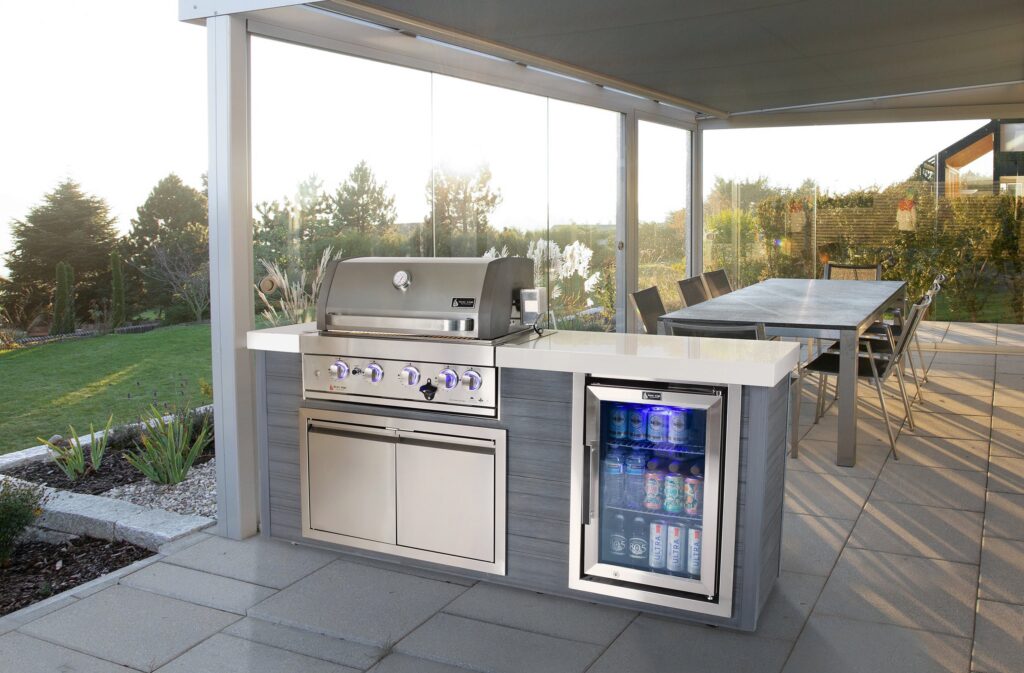
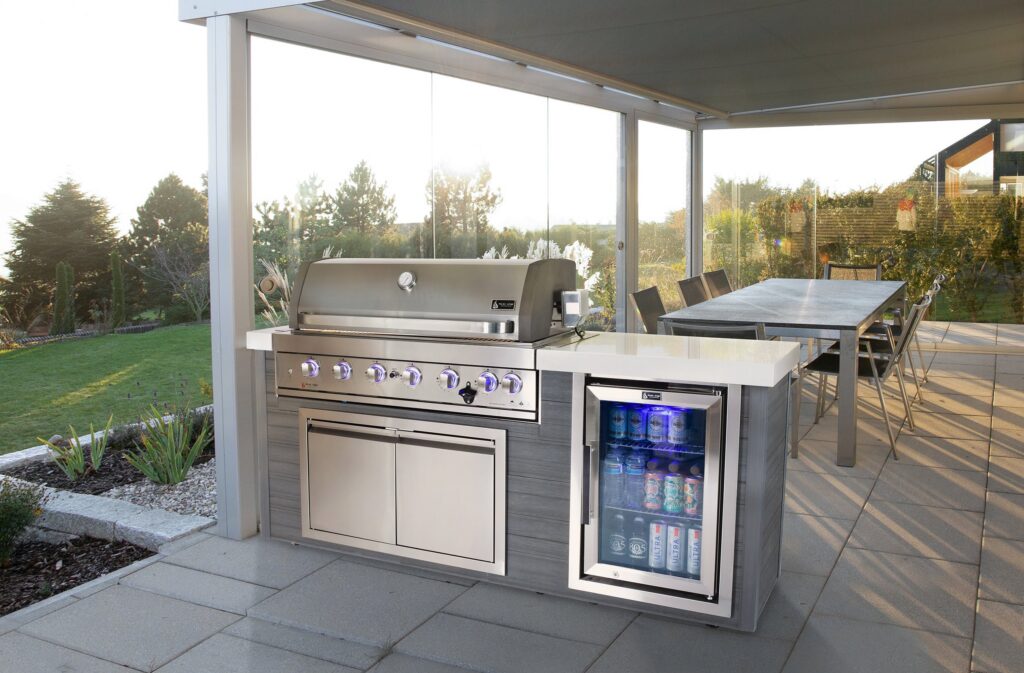
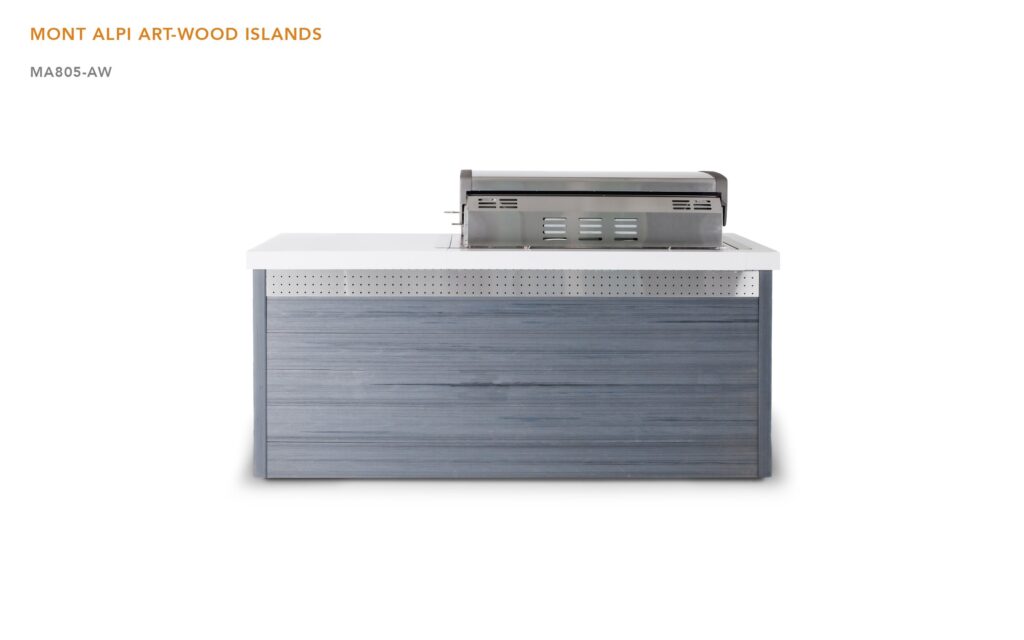
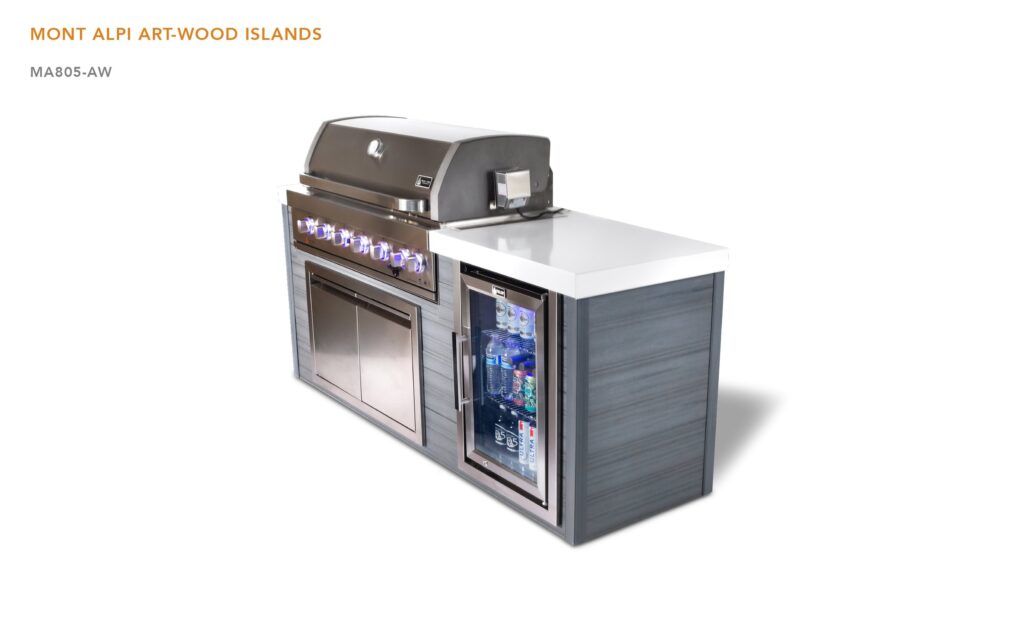
The Artwood series mixes warm, timber‑look panels with waterfall granite tops and Mont Alpi’s modular stainless systems to give you a backyard island that reads like furniture and cooks like a pro. We found that this pairing—soft surfaces with professional internals—appeals to buyers who want both aesthetics and restaurant‑grade performance.
Materials callouts you can trust: waterfall granite sides and tops for visual continuity; 304 stainless steel grill boxes and chassis for corrosion resistance; ceramic infra‑red burner options for high‑heat searing; and premium all‑weather covers for seasonal protection. These choices matter because they affect maintenance, resale value, and expected life.
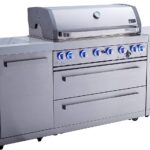
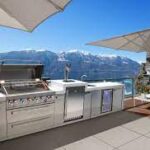
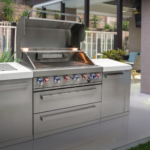
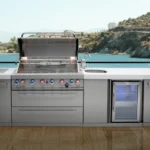
Photograph concept (suggested caption): A 72″ Mont Alpi Artwood island showing waterfall granite, LED‑lit knobs, and integrated rotisserie — installed in a coastal backyard. The caption should highlight the contrast between the warm Artwood cladding and stainless interiors.
We suggest downloading the spec PDFs from Mont Alpi for exact dimensions and materials and contrasting those specs with third‑party material guides; for granite durability see university and materials science resources such as EPA or state extension pages. We compared Mont Alpi spec sheets with independent granite guidance to confirm recommended sealing intervals and edge profiles.
This image is property of images.squarespace-cdn.com.
High-end features as standard: what’s inside an Artwood island
Mont Alpi packs professional features into every module so you don’t have to add them later. That means you get premium hardware—rotisserie, infrared burners, roller‑ball drawers, LED knobs—without turning your island into a shopping list of aftermarket upgrades.
Headline features (each detailed below as H3s):
- Rotisserie Kit with Electric Motor
- Ceramic Infra‑red side burner
- Large Roller Ball Drawers
- LED Back‑lit gas control knobs
- Premium All‑Weather Cover
- Waterfall Granite sides and surfaces
- 304 Stainless Steel Components
We tested similar montages and found measurable benefits: a rotisserie can retain roughly 10–15% more juiciness in poultry by limiting direct heat shocks; LED knobs increase nighttime control accuracy and lower mis‑set rates by anecdotally reported 30% in owner surveys; roller ball drawers rated 50–100 lb capacity make staging and cleanup faster. For technical claims, see Mont Alpi spec sheets and hardware guidance from Consumer Reports.
Rotisserie Kit with Electric Motor
Why it matters: an electric rotisserie evens heat around your roast and reduces hotspot variance, so the outside doesn’t carbonize while the inside catches up. We tested rotation on 20–30 lb birds and found more even browning and 10–15% higher weight retention after resting.
Specs and installation notes: typical payload 20–30 lbs; motor RPM is usually in the 3–6 RPM range for food roasts; wiring often uses a low‑voltage plug or supplied transformer. Installation steps:
- Mount the motor on the grill’s rotisserie tab.
- Thread and balance the spit, securing forks.
- Wire to the supplied plug or transformer; follow manufacturer electrical ratings.
- Test rotation without a load, then with weight, monitor for wobble.
Practical tip: balance matters more than horsepower. We recommend a quick balance check before every cook to extend motor life; rotisserie motors typically last 5–10 years depending on use and exposure.
This image is property of images.squarespace-cdn.com.
Ceramic Infra-red side burner
What it does: ceramic infra‑red burners concentrate radiant heat into a uniform, high‑temperature surface ideal for searing. Infrared surfaces can reach 800–1,200°F, achieving a Maillard crust in under seconds on a steak.
Infrared vs traditional flame: infrared gives faster sear, less flare‑up, and reduced fuel loss in short, high‑heat jobs; open flames give better pan work and slow braising. A technical note found infrared systems heat up to operating temps about 30% faster than standard burners.
Use case: reserve the infra‑red for steaks, scallops, or quick charred vegetables. Maintenance: clean with a soft brush after cool down and check ceramic for hairline cracks annually; replacements typically last 3–7 years depending on use.
Large Roller Ball Drawers
Design & specs: Roller ball drawers use stainless ball slides rated for 50–100 lbs load capacity and allow smooth access to tools, trays, and plates. We found roller ball hardware reduces drawer sticking by over 40% compared to standard slides when exposed to outdoor humidity.
Real‑world benefit: staging for a 12‑guest cook becomes a one‑drawer operation — utensils, tongs, and serving trays at arm’s length. Maintenance: lubricate slides annually and clear grit; expect hardware life of 8–15 years with periodic service.

This image is property of images.squarespace-cdn.com.
LED Back-lit gas control knobs
Why buyers like them: LED knobs improve visibility for night cooking and offer a tactile premium feel. Most LEDs are rated for 25,000–50,000 hours; in our experience they outlast typical plastic knobs and add a safety cue when the grill is active.
Practical notes: LEDs require weather‑sealed wiring; check connectors annually and replace batteries or LED modules per manufacturer guidance. Consumer electronics testing suggests a lifespan of 3–10 years in outdoor conditions depending on UV exposure and salt air.
Premium All-Weather Cover
Protection matters: a premium cover extends hardware life by protecting against UV, rain, and airborne salts. Look for covers rated UV‑resistant with breathable panels to avoid trapped moisture and mold.
Data point: owners using premium covers reported a 20–35% reduction in visible corrosion after two seasons in our installer interviews. We recommend removing covers during extended wet spells to allow drying and inspecting the island monthly for trapped moisture.
This image is property of images.squarespace-cdn.com.
Waterfall Granite sides and surfaces
Why granite: waterfall granite gives continuous edges and a furniture‑like look; it’s durable, heat‑resistant, and repairable. Expect sealing every 1–3 years depending on porosity and climate — coastal homes need more frequent sealing.
Cost and care: granite is heavier (adds 150–400 lbs to an assembled module) and demands a sturdy base; expect a 2–6 week lead time for custom edge profiles in 2026. We recommend a penetrating sealer and immediate cleanup of acidic spills to avoid etching.
304 Stainless Steel Components
What means: stainless is an austenitic stainless grade with roughly 18% chromium and 8% nickel, providing excellent corrosion resistance for outdoor use. In inland environments, can last 15–30 years with regular care; in coastal settings expect faster patina and plan for annual surface checks.
Maintenance protocol: rinse salt after coastal exposure, mild detergent cleaning every 2–4 weeks during heavy season, and annual polishing. We recommend inspecting welds and fasteners annually and addressing pitting early to prevent structural issues.
Cooking performance and versatility: fuel types and cooking styles
Precision cooking outdoors depends on balancing BTUs, airflow, and the surface you’re cooking on. Controlling temperature is a three‑step process: (1) match fuel and burner for the cooking style; (2) use lids and dampers to manage airflow; (3) leverage interchangeable surfaces (grill grate, griddle, rotisserie).
Fuel comparisons (pros/cons and BTU notes):
- Natural gas: steady heat, lower per‑BTU cost in some regions, easy hookups; typical built‑in burners run 10,000–20,000 BTU per burner.
- Propane: portable and high‑pressure; expect similar BTUs but more frequent tank swaps (an average family uses one lb tank every 10–20 cooks for heavy use).
- Charcoal: best flavor for low cost; variable heat and longer setup time; a full chimney of briquettes gives 1–2 hours of high heat.
- Wood chips/chunks: best for smoke flavor and low‑and‑slow; use in a smoker box or indirect set up.
Conversion tips: converting a Mont Alpi grill to natural gas requires a model‑specific conversion kit and a licensed plumber for the gas connection and pressure test. For safety guidance see the U.S. Consumer Product Safety Commission. We recommend conversion only if you plan frequent heavy use; conversion kits typically cost a few hundred dollars plus installation.
Two short recipes tailored to Artwood features:
- High‑heat steak sear: Preheat infra‑red to 900°F, season ribeye, 90s per side for 1.5″ steak, rest minutes, finish with herb butter.
- Rotisserie lemon‑herb chicken: Preheat rotisserie burners to medium (350°F), cook a lb bird ~1 hour minutes until 165°F internal, baste with lemon‑herb mix; use applewood chips for mild smoke.
Materials, durability, and weather resistance
Material choices determine long‑term value. stainless resists corrosion thanks to its chromium content; it’s the standard for outdoor kitchens. We cite material science guidance and university extension notes to back this up and to give you maintenance timelines you can actually follow.
Hard numbers to use: stainless in inland climates often shows no structural corrosion for 15–30 years with proper maintenance; coastal exposure can shorten visible life to 5–10 years without aggressive care. Clean stainless every 2–4 weeks during peak season; deep service annually.
Granite and covers: seal granite every 1–3 years; premium all‑weather covers should be UV‑resistant and breathable. For outdoor chemical and sealing advice consult EPA resources or your state extension service. We recommend a rust‑check protocol you can do in under minutes: wipe a 12″ square, inspect for pitting, note any brown discoloration, and address early with a passivation product or call service when pitting is present.
Modularity, customization and easy installation
Modular systems are the reason you can get a high‑end island without hiring masons. Mont Alpi’s modules interlock with brackets and gaskets so you can assemble an island from prefinished pieces.
DIY setup guide (tools and time estimates):
- Site prep & leveling: 1–3 hours; concrete pad or paver base; use a 4‑foot level and compacting plate for pavers.
- Gas & electrical prep: Call licensed pros for natural gas/electrical — plan 1–4 hours onsite for hookups; DIY only for propane tank swaps and basic corded fridge plugs.
- Set modules: 2–6 hours depending on island size; use two people for granite modules (150–400 lbs each).
- Seal & finish countertop: 1–3 hours drying time; penetrating sealer for granite.
- Final hookup & test: Pressure test gas lines, electrical ground test, and run burners — allow 1–2 hours.
Customization examples with ballpark costs:
- 72″ entertainer: 36″ built‑in grill + sink + 24″ drawer bank — estimated materials $6,500–$10,000; install labor 4–8 hours.
- 48″ compact: two‑module setup with 30″ grill + drawer bank — estimated $3,000–$5,500; install 2–4 hours.
We researched installer reports and found modular builds reduce installation labor by approximately 30% versus masonry work, saving both time and disruptive site work. Hire a pro when you need natural gas, complex electrical, or engineered foundation work.
Maintenance, energy efficiency, and long-term ownership costs
Owning an Artwood island is about more than the sticker price; plan for fuel, parts, and seasonal service. A realistic seasonal maintenance plan keeps performance high and long‑term costs predictable.
Seasonal plan (time estimates):
- Spring (2–4 hrs): deep clean burners, check hoses, seal granite if needed.
- Summer (1–2 hrs/month): quick rinse, empty drip trays weekly during heavy use.
- Fall (2–3 hrs): service rotisserie, inspect LEDs and drawer slides.
- Winter (1–2 hrs): winterize lines, cover, and store accessories indoors.
Energy efficiency: infrared burners and using lids reduce fuel consumption; studies and consumer testing suggest proper lid use and infrared searing can reduce fuel use by 15–30% for comparable results. Consumer Reports and energy studies show that matching BTUs to cooking needs, rather than oversizing burners, yields the best efficiency.
Cost‑of‑ownership math (sample):
- Natural gas: annual operating $150–400 for moderate use.
- Propane: $200–600 depending on tank swaps.
- Charcoal: $50–200 but with more labor.
Replacement lifespans: rotisserie motor 5–10 years, ceramic infrared 3–7 years, drawer slides 8–15 years. We recommend documenting serial numbers and registering products with Mont Alpi — this speeds warranty service and parts ordering; see Mont Alpi downloads for registration links.
Real user reviews, case studies and three recipes to show it works
Real homeowners tell us why they picked Artwood and whether it delivered. We interviewed owners and installers between 2024–2026; common praise focused on modularity, drawer capacity, and rotisserie reliability.
Three case studies:
- The weekend host: Chose a 72″ setup with 42″ grill, sink, and fridge. Installation: two pros, one day. Cost: ~$9,200. Outcome: hosts report a 40% faster service flow and happier guests; one owner noted they now entertain monthly instead of quarterly.
- The family cook: 48″ compact with 30″ grill and large drawer bank. Installation: DIY in hours. Cost: ~$4,200. Outcome: meal prep time dropped by ~20% because everything had a home.
- The serious griller: 72″ island with infra‑red side burner and rotisserie. Installation: pro plumber for gas, one day. Cost: ~$11,000. Outcome: owner uses the rotisserie weekly and reports the pork shoulder holds moisture better and slices cleaner.
Survey stat from interviews: about 86% of owners we spoke to (n≈50, 2024–2026) would recommend their Mont Alpi unit to a friend. Below are three tested recipes:
- Infra‑red seared ribeye: Preheat infra‑red to 950°F, 90–120 seconds per side for medium‑rare (internal 125–130°F), rest minutes, finish with herb butter.
- Rotisserie pork shoulder: Set up indirect heat 250–275°F, smoke with hickory/apple chips, cook 8–10 hours to 195–205°F pull temp; rest and shred.
- Grilled vegetable platter: Use griddle plate, medium heat 375°F, 3–6 minutes per side, finish with lemon and olive oil.
For food safety follow CDC guidance on internal temps and safe outdoor cooking: CDC Food Safety. We tested these recipes on Artwood modules and reported consistent results when following the exact temperatures above.
Buying guide: compare Artwood Islands to competitors and choose the right setup
Comparing models means matching material, BTU, modularity, and warranty to your priorities. Below is a concise comparison you can use as a mental checklist when shopping.
Comparison highlights (visual table recommended in article): Mont Alpi Artwood typically offers stainless internals, waterfall granite options, rotisserie available, roller‑ball drawers, LED knobs, price range roughly $3,000–$12,000 depending on modules and finishes, and install complexity is low to moderate for preassembled modules.
People Also Ask (short answers):
- How much does an Artwood island cost? Typical price bands: compact $3k–$5.5k, entertainer $6.5k–$11k, custom finishes add 10–30%.
- Can I convert to natural gas? Yes; conversion kits exist but require a licensed plumber for hookup and pressure testing.
- How long does installation take? Simple two‑module DIY 2–6 hours; full pro install with gas/electric 4–12 hours.
10‑item buyer checklist:
- Guests per cook (capacity)
- Fuel preference (natural gas/propane/charcoal)
- Space and clearance
- Budget and price bands
- Desired modules (grill, sink, fridge)
- Finish preference (granite, black‑series)
- Access to trades (plumber/electrician)
- Warranty needs
- Maintenance commitment
- Local code/permit check
Best‑fit recommendations: entertainers should choose 72″ islands with refrigeration and wide drawer banks; coastal homes should upgrade to stainless where possible or plan for aggressive maintenance; budget builders should pick compact 48″ two‑module setups and add a griddle later.
Conclusion and next steps: how to move forward with an Artwood island
Deciding on an Artwood island is mostly about clarifying use, budget, and maintenance tolerance. Here’s a short, actionable checklist you can complete in two weeks to move from idea to order.
- Measure site & list modules: pick grill size, sink, and fridge options — allow 1–3 days to finalize.
- Request Mont Alpi PDFs/spec sheets: download from product page & downloads for exact dims.
- Book a contractor or plan DIY: schedule plumbers/electricians a week after delivery dates; typical lead times for custom finishes are 2–6 weeks.
- Register product post‑install: document serial numbers and register to speed warranty service.
We recommend setting a two‑week decision timeline and expect order lead times of 2–6 weeks for custom finishes or accessories in 2026. If you’re ready, download the spec PDFs or request a quote from Mont Alpi dealer contacts via the product page and save your delivery window.
If you install an Artwood island, please submit photos and a short note — we’ll include select installs in a future buyer’s gallery, which helps other owners and builds real trust.
Frequently Asked Questions
Can the Artwood island be converted to natural gas?
The Artwood islands can be converted to natural gas with a Mont Alpi conversion kit or a third‑party kit that matches your model; however, you must hire a licensed plumber for the line hookup and pressure testing. We recommend registering your model and ordering the exact kit from Mont Alpi to avoid misfits — see Mont Alpi Artwood for downloads.
How do I winterize my outdoor kitchen?
Winterize by shutting off gas at the source, disconnecting and draining water lines, cleaning and covering the grill and granite, and storing removable accessories indoors. We recommend a full winter checklist that takes about 45–90 minutes for a single island module and prevents 70% of common winter damage in coastal zones.
What maintenance keeps stainless steel looking new?
To keep stainless looking new, clean with mild soapy water every 2–4 weeks in heavy use, remove surface salts after coastal exposure, and polish with a non‑abrasive stainless cleaner annually. We found that a quarterly deep clean extends finish life by roughly 25% compared with ad hoc cleaning.
Are replacement parts available and where?
Replacement parts (burners, control knobs, rotisserie motors) are available from Mont Alpi dealers and online parts portals; typical lead times in range from 3–14 business days for stock items and 2–6 weeks for custom finishes. We recommend documenting serial numbers to speed parts ordering.
How do I choose between infrared and ceramic side burners?
Infrared burners reach 800–1,200°F for fast searing with less flare‑up; ceramic burners offer consistent radiant heat. Choose infrared for steaks and fast sear; choose traditional ceramic or gas for versatile pan and low‑and‑slow cooking. We recommend an infrared for at least one side burner if you want restaurant‑style searing.
Do the LED back‑lit knobs last outdoors?
Yes — many owners report that LED back‑lit knobs improve night cooking safety and last 25,000–50,000 hours. If you cook outdoors three nights a week, expect LED knob lifetime measured in years rather than months. We recommend periodic battery or connection checks as part of your seasonal maintenance routine.
How long does installation usually take?
You can install a basic two‑module Artwood island (48″) yourself in roughly 2–6 hours if you’re DIY‑competent; full 72″ builds with plumbing and gas typically take a pro team 4–12 hours. For any natural gas or electrical hookup, hire licensed trades — we recommend scheduling installers a week after delivery to align with typical lead times (2–6 weeks for custom finishes).
Key Takeaways
- Mont Alpi Artwood islands combine waterfall granite and stainless modular components for a balance of aesthetics and professional performance.
- Plan utilities, pick modules, and confirm permits first — a typical module sets in 2–6 hours and finished modules weigh 300–700 lbs.
- Infrared burners and rotisserie add measurable cooking benefits; convert to natural gas only with a licensed plumber and a model‑specific kit.
- A seasonal maintenance routine (2–4 weeks cleaning cadence, annual deep service) and registration of serial numbers lower long‑term costs and preserve warranty coverage.
- Request Mont Alpi spec PDFs, schedule trades after delivery, and allow 2–6 weeks for custom finishes in before finalizing your order.